
VR TRAINING
How XR Improves Training Programs for High-Risk Industries
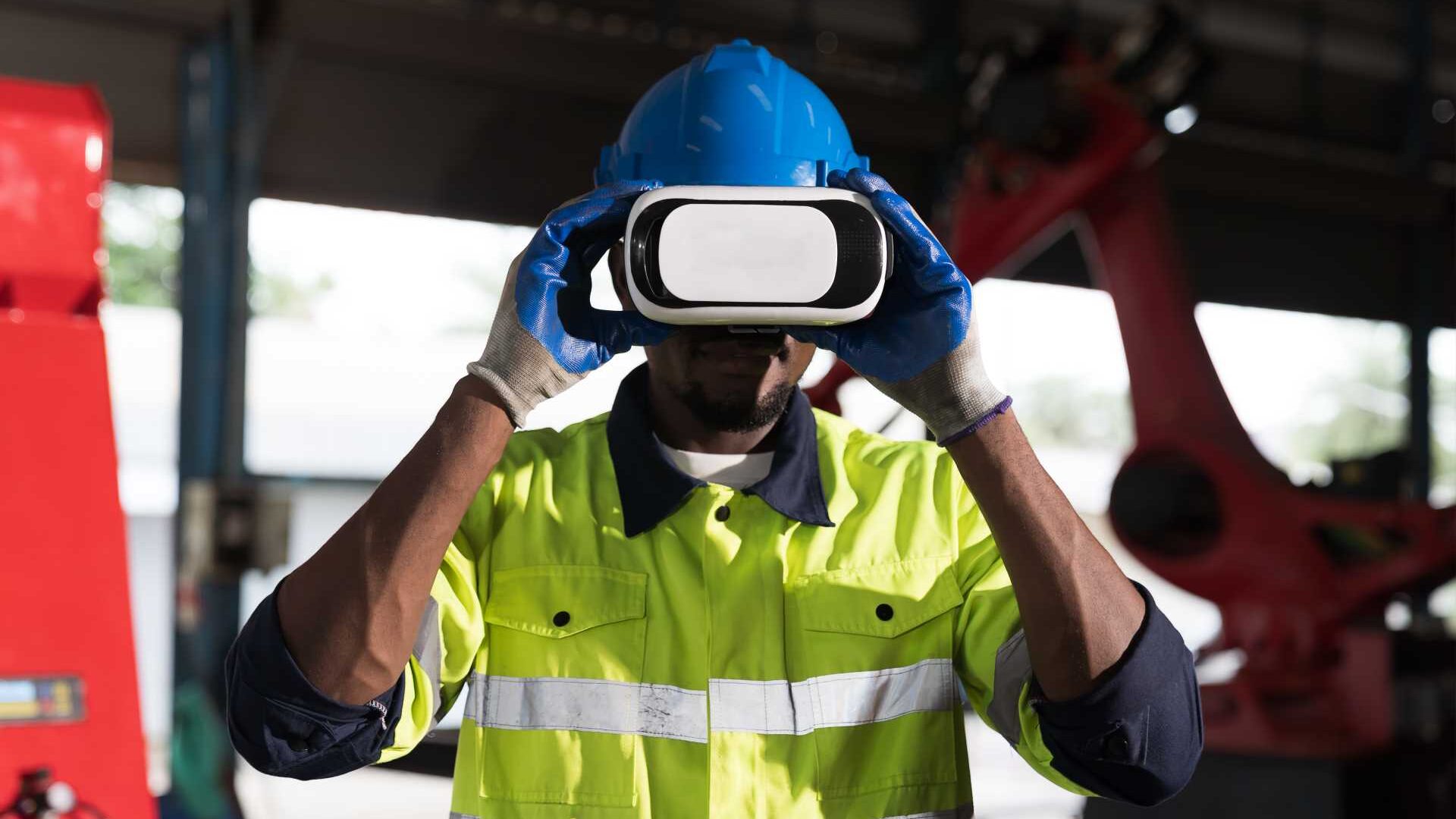
High-risk industries include sectors where personnel are subjected to heightened risks of accident or injury due to the nature of the training or work involved. Typical high-risk industries include military, aerospace, law enforcement, oil and gas, and heavy manufacturing, among others.
Training employees in these industries through traditional methods often means they’re subjected to high levels of risk in order to emulate the real-life conditions they’re likely to confront on the job. For instance, more U.S. troops die during combat training than in actual combat.
While automation and remote work have the potential to mitigate some of these incidents, particularly with manufacturing and private industries, the problem still exists. This is where extended reality (XR) comes in. XR is increasingly becoming a mainstream technology to help deliver improved training programs where learners can upskill themselves without the risk of physical harm.
Here is a quick primer on how XR is reshaping the training industry to deliver safer, more modern training programs.
What Is Extended Reality (XR)?
XR is a collective term for technologies that “extend” a user’s reality with digitally enhanced experiences.
XR encapsulates three different technologies:
- Augmented Reality (AR): AR helps augment a real-life situation. It’s an interactive experience that involves superimposing digitally created elements, such as images and videos, over a real background. It can also emulate multi-sensory (i.e., haptic, auditory and olfactory) stimuli.
- Virtual Reality (VR): VR is perhaps the most commonly known and used technology of the three types of XR. It involves creating completely digital simulations, essentially computer-generated environments that mirror real-life situations. It’s a very useful training tool that is actively used by organizations in a host of different industries.
- Mixed Reality (MR): MR is a similar-yet-heightened version of AR. Physical and digital elements can co-exist in MR environments and interact with each other to provide surreal experiences.
Key Advantages of XR Training Programs
XR, and particularly VR, has revolutionized training delivery. XR can digitally simulate real-life environments, allowing users to participate in realistic training virtually.
Research has found that simulation training is an effective alternative to in-person learning environments. As a result, trainees are able to learn and develop skills in a VR environment much the same way as they would when practicing physically.
There are immense benefits to implementing XR-led training for private and government entities involved in high-risk activities, such as:
- Improved Safety
One of the biggest advantages of XR training is that it improves safety across the board. A VR simulation can replicate real-world environments with near-perfect accuracy. This offers your trainees a fully immersive environment where they can train for different skills, such as law enforcement and emergency response, all without being subjected to any actual physical danger.
This allows you to expose trainees to a wider range of scenarios that may prove too dangerous or difficult via traditional methods. This is particularly true when training first responders: It also allows employees to confidently execute their training and test their skills and reaction times, safe in the knowledge that it is a simulation.
- Shorter Learning Curve
XR training isn’t just safer, it’s faster as well. Immersive training simulations engage multiple senses and can combine those senses with audio-visual inputs to help guide learning.
Implementation has shown that this significantly speeds up training. In fact, one provider found that its solutions were able to reduce learning time by 95%.
A shorter learning curve allows you to train more people with far more efficiency. It also helps cut down on training costs, while delivering improved value.
- Greater Productivity
Recent research has shown that VR training can significantly contribute to improved reaction times and knowledge retention, thereby improving skill application when on the job. It also helps reduce errors and boost accuracy, helping you slash operational costs.
In general, XR training can deliver a more productive workforce that performs better and is able to accomplish more in less time, all of which directly contributes to your bottom line.
- Cost-Effective
XR training is also a cost-effective method on multiple fronts. For starters, it’s easier to set up. Depending on the provider, VR simulations can be fully customized to any situation in a matter of weeks, if necessary. This means minimal development time is spent on each program, which eventually amounts to a fraction of what you would spend training candidates on, say, a real-life oil rig or an aircraft.
VR simulations also help your trainees learn without damaging any actual equipment, which can be particularly costly in the case of emergency vehicles. With improved productivity and accuracy on the job, VR training offers you undeniable cost savings over conventional training modalities.
Examples of XR Training Applications in High-Risk Industries
XR is a very versatile technology. It has been deployed for training purposes across industries, including for private corporations, government entities and nonprofits. Some industry-specific examples include:
- Firefighters: VR can be a critical technology for training firefighters. It eliminates the risk of injuries and workplace hazards while trainees can still learn on the job. It allows you to develop a number of dynamic scenarios to test how your learners will react when confronted with unpredictability so you can better evaluate their success. It’s also cheaper to train users within a virtual simulation than in a specially modified building or facility that’s on fire.
- Military Applications: XR is widely used in the military, especially for fighter pilot training. The U.S. Air Force, for instance, uses VR for training B-52 pilots in digitally recreated environments. This allows trainees to familiarize themselves with the airplane controls and operating procedures and test their flying skills in a simulation. It’s safer for both the individuals and the planes — which can cost tens of millions of dollars per jet.
- Oil and Gas: Oil rigs can be a dangerous place to work. They’re often located in remote locations, such as the middle of the sea or a desert. And personnel have to contend with extreme work environments, heavy machinery and flammable materials. VR training is often used to provide tailored training to oil and gas employees to acclimatize them to the environment and reinforce work and safety protocols designed to minimize workplace hazards.
Best Practices for Launching an XR Training Program
Once you decide to implement an immersive training program, where do you start? Before ordering the headsets or a specific program, it’s advisable to speak with your employees and gauge how they feel about changing the delivery modality. Not everyone is comfortable with XR technology, and it’s important to show that you are considering everyone’s feedback.
You should also consider your budget. While it may seem like investing in the newest technology is the way to go, it’s important to take a step back and consider the desired outcome of the program. If you can achieve that outcome with a headset that’s a few years old, that’s perfectly fine!
When you begin thinking about how to implement the training, you may opt for combining it with training that’s already in place. You can use eLearning for a preliminary lesson, then practice those lessons in a risk-free environment. Remember to get employee feedback on the effectiveness of the new training program and work to keep it updated to see the best return on investment.
Conclusion
XR is no longer seen as an experimental technology for training applications. It’s very much a proven methodology that has and continues to show results. It’s not hard to envision a future where it replaces much of conventional training across industries to minimize risk and improve productivity.